[The] Solomon Islands is a mythical land. A mythical land with a very long past. Archaeological evidence shows human presence as early as 30,000–28,000 years ago. These were likely Papuan-speaking peoples who arrived via land bridges or short sea crossings from the Bismarck Archipelago. Around 3,500–3,000 years ago, Austronesian-speaking peoples (the ancestors of modern Polynesians and most Melanesians) arrived with the distinctive Lapita pottery. They introduced domesticated animals (pigs, dogs, chickens), new crops, and advanced seafaring technology. Most modern Solomon Islanders are descendants of the intermixing between these Austronesian arrivals and the earlier Papuan populations.
My wife’s people have an unbroken lineage reaching back longer than people can say. My father-in-law’s oral tradition traced his bloodline through 13 generations. I spent a number of years sitting with him as he “told his stories”. I paid close attention and was (still am) amazed at his faithfulness to the “tradition”. I listened to him tell many different stories. I listened to him repeat his stories numerous times. His words varied little, if at all, from telling to telling.
His stories brought the “ancestors” to life. The tribe, the people in the family, knew their ancestors well, intimately. Some were comical personalities. Some were fierce, deadly, to be feared. There were tales of war, famine, feast and life of a family group moving through time. The names of those long dead ancestors live to this day in the names of the children of the tribe.
Ancestor Worship was the status quo for generations. My father-in-law was born a heathen, a pagan practicing ancestors worship. His lifetime saw the advent of Christianity. In my time spent “in the village” I made many trips to various “pagan alters”. Every tribe had their tribal alter where they worshiped their personal ancestors.
Often, the ancestors were worshiped with blood…
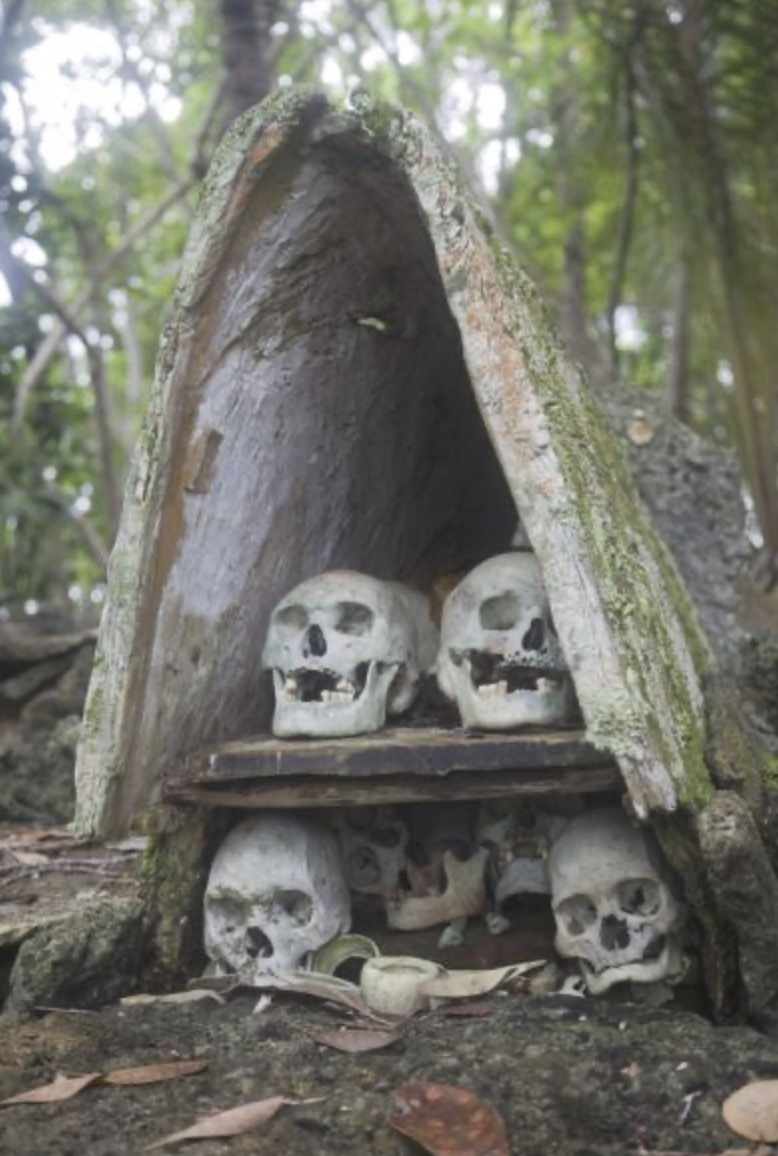
The ancestors enjoyed receiving the heads of their slain enemies. The ancestors enjoyed receiving the gifts of blood.
I have been to a couple sites where many skulls were piled high and deep. My wife’s maternal grandfather, Kapakesa, was a taker of heads. His alter exists to this day, untended, uncared for, neglected, forgotten.
For most of these islands (there are thousands) the past 125years of change have not been terribly positive. The first generation of Islanders living in a “cash economy” reaped many benefits from “white-man ways”… Diabetes, cancer, and high blood pressure are a couple imported problems. The change in diet was horrendous. From fresh garden produce to imported rice and tinned food. Tobacco, grog (in its many forms), sugar… all aided and abetted the early death of the first generation of “cash economy” Islanders.
My wife’s generation represents the “first generation”, post traditional life style. Most of this generation passed in their 50s. Those remaining, now, in their 60s, represent the lucky ones that survived the transition from traditional to modern lifestyles. Their children, my children, represent the “second generation”, post traditional life styles. They have a chance to control and manage the future. Noting their parents and grandparents were “taken by storm”. Their world changed so quickly and so dramatically all participants were simply swept up and taken into the future to struggle and find a way forward.
This second generation is now in control of the future. Since “first contact” and since independence I don’t think there is a whole bunch to brag about.
From an olfart’s point of view the place is run down, unkept, neglected and mismanaged.
From the young folk’s point of view, from the new leader’s point of view, the place is booming.
If you want to work, if you are willing to work there are many opportunities.
So I return from this trip optimistic. And am planning my next trip back very soon.
More later
 The Native Iowan
Leave a comment